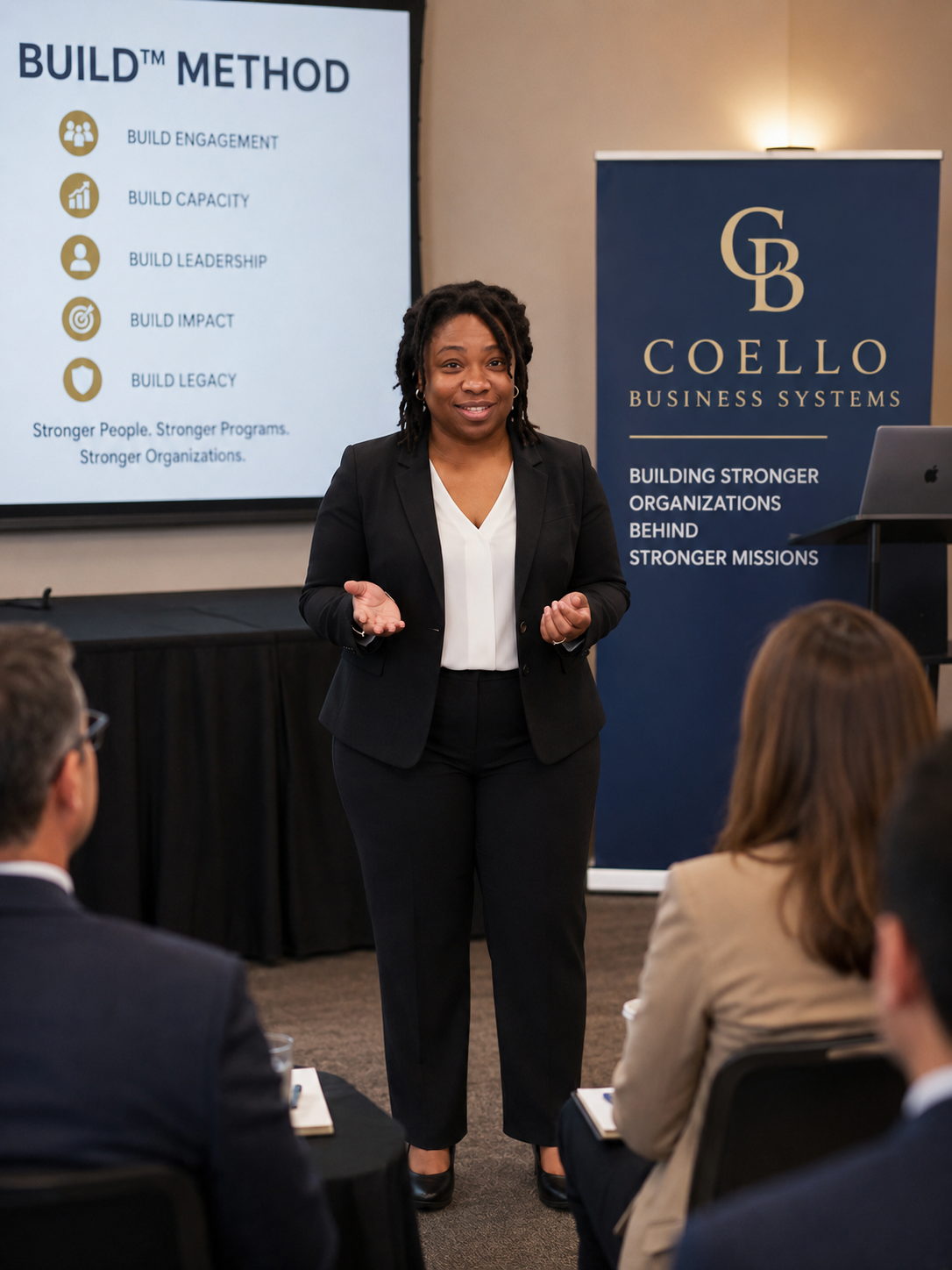
Executive-level sessions that translate into action.
The BUILD Method as a management operating system for human service leaders.
How senior teams stop running the crisis and start running the organization.
A practical, non-hype adoption roadmap tailored to mission-driven operations.
What actually holds direct support and clinical talent past 90 days.
Turning documentation from burden to defensible operating asset.
What every Board of Directors should be asking about organizational health.
Listen Before You Label
What Adoption Professionals Can Learn From an Adoptee Who Wasn’t Heard
What happens when adults believe they understand an adopted child without fully listening to that child? Drawing from her lived experience as one of six biological siblings separated between two adoptive families, adult adoptee Shirley Coello explores how assumptions about behavior, attachment, gratitude, identity, and family relationships can replace a child’s own truth. Participants examine the difference between interpreting a child and creating a safe space in which the child can be heard. They leave with practical ways to recognize potentially harmful assumptions, ask more open and child-centered questions, and build relationships grounded in curiosity, trust, and genuine listening.
Participants will learn to
- •Identify assumptions adults may make about an adopted child’s behavior, attachment, identity, gratitude, and family relationships.
- •Distinguish between an observable behavior, an adult’s interpretation, and the meaning expressed by the adopted person.
- •Reframe adult conclusions as open, child-centered questions.
- •Apply listening practices that support trust, identity, belonging, and honest communication.
Available as a 60- or 90-minute keynote, conference breakout session, professional-development workshop, or caregiver-education session.
Shirley Coello
Shirley Coello is the founder and principal consultant of Coello Business Systems, a professional trainer, and an adult adoptee. She is one of six biological siblings who were separated between two adoptive families. Her lived experience informs her work helping adoption professionals and caregivers examine the difference between interpreting a child and genuinely listening to that child. Shirley combines personal insight with a structured, practical facilitation style that helps audiences turn reflection into more child-centered communication and relationship practices.